BPM practice · Process Modelling System · 2023 – 2024
BPM practice turned into a product: a single source of truth for how an organisation works
Transformed BPM consulting methodology into an enterprise-wide process modelling system adopted by 10 organisations. Designed it around the BPM lifecycle and process architecture principles. Directed development, testing and rollout.
- Client
- BPSolution’s own product, used by client organisations across industries — asset management, brokerage, trading, dental care and others
- My role
- BPM lead and product owner (Co-founder & CEO | Process Transformation Lead, BPSolution)
10
organisations using it as their standard process inventory system
Modelling levels
From high-level E2E process maps to detailed task-level workflows, with instructions, forms, checklists, videos and links attached to each process step
Ownership
Every process is linked to the organisational structure and relevant governing documents, with a clearly assigned owner
How an organisation knows its processes
Before
Knowledge scattered across units and people
- 1
Each unit draws its own version of a process
- 2
When designing or improving a process, diagrams are sent to every person’s screen and replies collected one by one
- 3
When people leave, the knowledge of how the work is done leaves with them
- 4
Automation teams rediscover the process every time
After
One repository · the single source of truth
- 1
One standard process map for everyone, in a single repository
- 2
Designing and improving a process happens in the system — reviewed and approved there, with both sides working from one source
- 3
Each step carries its documents, forms and video instructions, so newcomers do it right
- 4
RPA teams take the process information they need straight from the repository
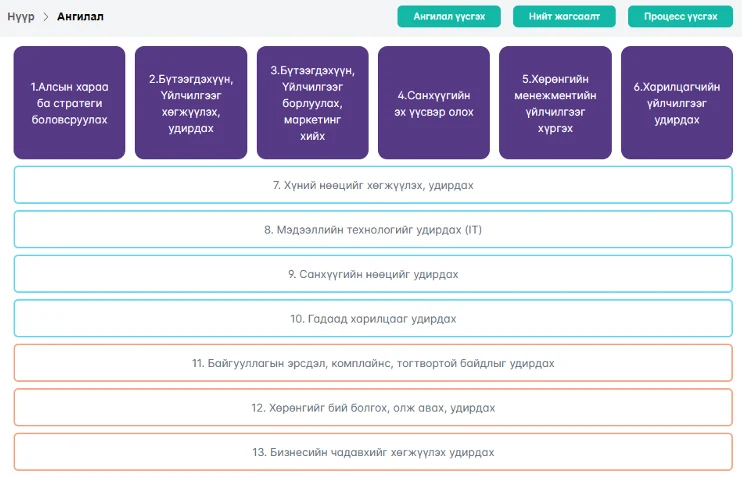
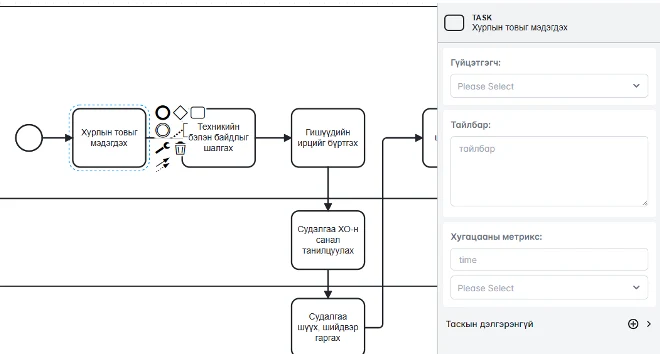
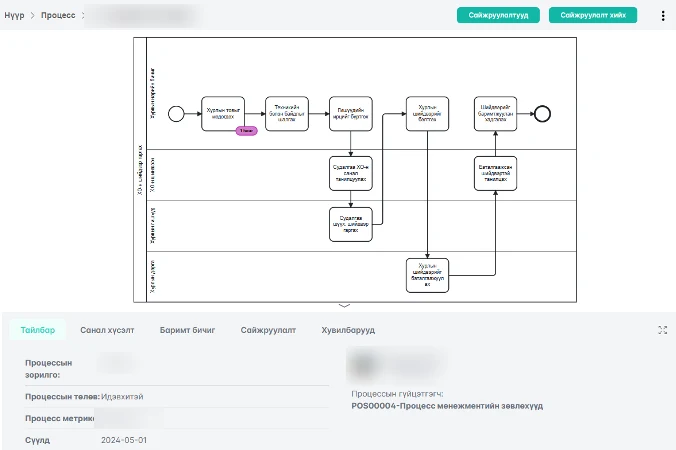
Screens from BPSolution’s demo environment; staff names and test data hidden.
- S
Situation
Across multiple BPM projects, I repeatedly saw the same problems. Each department maintained its own process documentation, with no common standard or central repository. Process reviews relied on emailing diagrams and collecting feedback individually. High staff turnover also meant organisations frequently lost critical operational knowledge when experienced employees left.
I recognised that organisations needed a central process repository as the foundation for sustainable BPM.
- T
Task
As co-founder and CEO, turn this consulting insight into a scalable cloud product: an organisation-wide, trusted source of truth for process architecture, documentation, ownership and continuous improvement, while enabling process standardisation, internal audit and automation.
- A
Action
- Defined the product vision: Designed the concept in mid-2023 and developed the first version over six months, securing the first paying client in spring 2024.
- Built it around BPM principles: Translated practical BPM experience into a structured system covering process architecture, ownership, documentation, performance metrics and governance.
- Designed the process architecture: Established a hierarchy of process categories, groups, end-to-end processes, activities and tasks, classified as core, support or management processes.
- Enabled multiple modelling levels: From high-level end-to-end process maps to detailed task-level workflows, with instructions, forms, checklists, videos and links attached to each process step.
- Established process ownership: Linked every process to the organisational structure and relevant governing documents, with clearly assigned owners, performers and performance metrics.
- Embedded governance and continuous improvement: Replaced email-based reviews with a central workflow for improvement suggestions, ownership, version control and approval. Introduced process statuses such as active, draft, under improvement and being automated.
- Designed for automation and audit: Enabled RPA teams to access process information directly. Also incorporated audit functionality to compare documented processes against actual operations.
- Led product development and deployment: Directed developers, defined requirements with business analysts, designed role-based permissions and multi-tenant architecture, led testing and documentation, and managed client rollouts independently or alongside Camunda BPM Suite implementations.
- R
Result
- Adopted by 10 organisations as their standard platform for process inventory, improvement and automation management.
- Preserved operational knowledge: Clients reported that new employees could follow documented processes independently using embedded instructions, forms and videos.
- Delivered enterprise-wide implementation at an asset management company, establishing 13 process groups and documenting 100+ end-to-end processes.
- Achieved detailed process documentation: Mapped 24 processes in BPMN down to task level, with supporting instructions, videos and materials.
- Built a scalable product: Transformed BPM consulting practices into an enterprise-wide process management platform that supports standardisation, governance, continuous improvement and automation.